
Haiku Deck Superstar
1 Haiku Deck
How to Hire the Best Fire Watch Company for Your Business Needs
1 Slide
Business
The call usually comes at the worst possible time. A system failure. A compliance notice. A project that can’t be delayed. Suddenly, you’re responsible for ensuring fire protection in an environment where the usual safeguards are no longer fully reliable. Warehouses handling hazardous chemicals contact Fire Watch Companies Near Me to minimize potential fire risks efficiently, especially when conditions demand immediate and specialized oversight.
You’re not browsing casually you’re deciding quickly. And in that moment, hiring a fire watch company isn’t about finding the best option on paper. It’s about choosing a provider that can actually control risk in your specific situation.
The First Mistake Most People Make
You start searching. Within minutes, you’re looking at multiple fire watch services, all offering similar promises: 24/7 availability, trained guards, emergency response.
It feels like a comparison exercise.
But here’s the problem you don’t yet know what you’re comparing.
Fire watch is defined as assigning trained personnel to monitor a property for fire hazards when fire detection or suppression systems are impaired or when activities increase fire risk. That sounds simple, but it hides the most important detail: 👉 The way fire watch is delivered depends entirely on the environment. Until you understand your risk, every company looks the same.
What’s Actually Happening at Your Site Right Now
Before making any calls, pause and look at the condition that triggered the need. - Is your fire alarm system offline? - Is construction introducing new hazards? - Is hot work actively generating sparks and heat?
Each scenario changes how fire watch should operate.
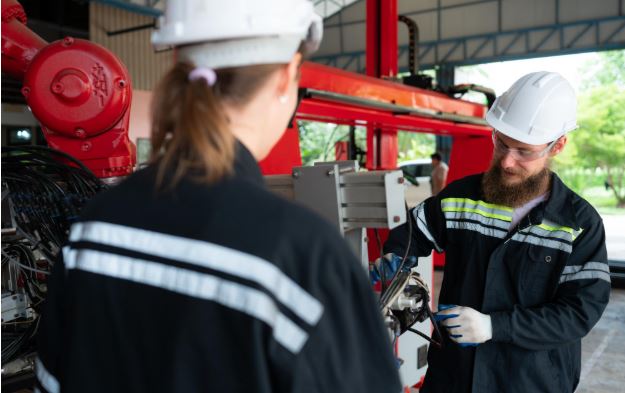
For example: - In construction zones, monitoring must follow active work, not fixed routes - In industrial facilities, attention shifts toward heat buildup and machinery stress - In commercial spaces, the priority may be occupancy and safe access
This is why fire watch requirements are enforced strictly under standards set by the OSHA and the NFPA because risk behaves differently depending on context.
If you skip this step, you risk hiring a provider who doesn’t match your situation.
The Moment You Realize Speed Isn’t Enough
Let’s say you’ve narrowed it down to two companies.
One promises immediate deployment. The other asks detailed questions before confirming availability.
Under pressure, the first option feels right. But think about what those questions actually mean. They’re not delaying they’re assessing.
A provider that asks about layout, operations, and current conditions is trying to understand where risk exists before placing guards.
A provider that skips this step may respond quickly but without direction. And in fire watch, undirected presence creates gaps.
A Scenario That Happens More Often Than It Should
A warehouse continues operations after a sprinkler system issue is identified.
Fire watch is arranged quickly. Guards arrive, patrols begin, logs are maintained.
Everything looks compliant. But over the next several hours, conditions shift. Equipment continues generating heat. Materials are moved temporarily into tighter spaces.
Airflow changes due to operational adjustments.
The guards continue their routine patrols.
No one connects the changes.
This is how risk develops not from absence, but from lack of interpretation.
The best fire watch companies don’t just monitor they understand.
What You Should Be Listening For (Not Just Looking At)
When speaking with a provider, most people focus on availability, pricing, and coverage.
Those matter but they don’t reveal capability.
Instead, pay attention to how the company talks about your situation.
Do they explain how they’ll monitor differently based on your environment? Do they mention adjusting patrols based on risk? Do they talk about coordination with your operations?
These signals tell you whether you’re hiring a service or a solution.
The Role of Fire Watch Guards Beyond the Obvious
It’s easy to assume that fire watch guards are there to walk, observe, and report.
But their real responsibility is more complex.
They are the only active system in place when automated protection is compromised.
Their job is to identify early indicators of fire risk before those indicators become visible hazards.
This includes recognizing: - how heat interacts with nearby materials - how temporary setups change risk patterns - how activity levels affect fire exposure
This level of awareness cannot be replaced by routine.
Emergency Fire Watch Changes the Entire Decision
Sometimes, you don’t have time to evaluate thoroughly.
A system fails unexpectedly. A fire marshal requires immediate coverage. Operations must continue.
In these cases, emergency fire watch becomes necessary.
The best providers handle this differently.
They don’t just deploy quickly they establish structure immediately.
They identify high-risk zones, adjust monitoring from the start, and maintain communication throughout the operation.
This ability to perform under pressure is what separates top providers from the rest.
A Simple Way to Cut Through the Noise
At some point, you need to decide.
Not based on marketing. Not based on assumptions. But based on what actually matters.
Focus on three things: - how well the company understands your specific risk - how they adapt their monitoring approach - how consistently they maintain control over time
If these are clear, the decision becomes easier.
Where Most Hiring Decisions Go Wrong
The biggest mistake isn’t choosing the wrong company it’s choosing based on the wrong criteria.
Availability without understanding Speed without structure Presence without awareness
These combinations create coverage that looks complete but leaves critical gaps.
Fire watch services are not about filling space they’re about controlling conditions.
Final Thought
Hiring the best fire watch company is rarely about finding a perfect option it’s about making the right decision under imperfect conditions. When fire protection systems are impaired and risks are elevated, the provider you choose becomes the primary safeguard for your property and operations. The companies that truly stand out are not the ones that respond the fastest or promise the most, but the ones that understand how risk behaves in your environment and adapt their approach accordingly. In situations where every detail matters, that level of awareness and execution is what ultimately ensures safety, compliance, and control.