
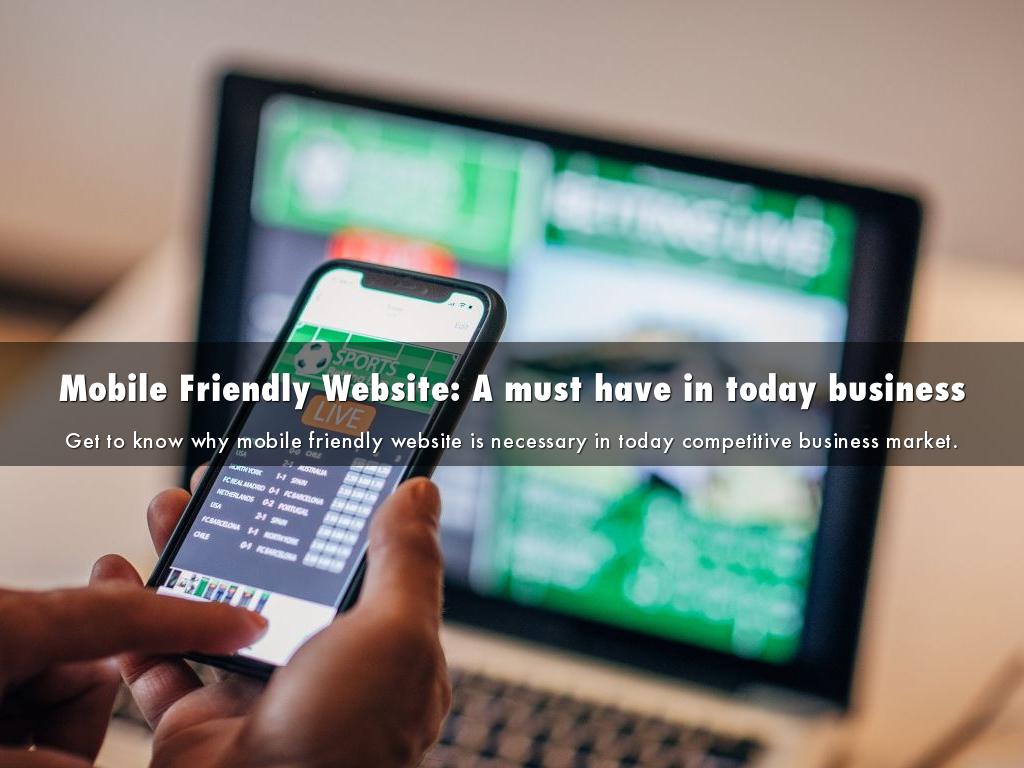
Mobile-Friendly Websites: A Must in Today’s Market
1 Slide3 Views
Science and Technology, Business
There are a lot of people online today who use phones and tablets to browse. There is more than 50 percent of web traffic generated by mobile devices. What that means for businesses is that they need to ensure that their websites work well on smaller screens. Having a mobile-friendly website will help companies reach out to more people, keep their visitors happy, and help the business grow.
The Rise of Mobile Usage
Mobile devices have been hugely popular over the last ten years. We use our phones to do almost anything—we shop, we read, we watch videos. The number of mobile users keeps growing annually. Mobile phones are the main way in which people access the internet in some places. Many visitors will leave a website that doesn’t work well on a phone.
What Makes a Website Mobile-Friendly?
A mobile-friendly website is one that changes according to different screen sizes. When your website is responsive, the same thing works on a computer, a tablet, or a phone. Mobile-friendly websites also load fast. Nobody waits for a page to appear. It’s also important that navigation is easy. You want buttons that can be tapped and menus that are easy to use. Responsive web design for law firms is as necessary as for other businesses.
Why Mobile-Friendly Websites Are Important
Better Search Engine Rankings
On mobile devices websites that perform well are ranked higher by search engines like Google. A website that is not mobile-friendly will change the position of a website in their search results. It makes it harder to find the website.
Improved User Experience
A mobile friendly is an extra advantage that makes it easy for a visitor to browse. They can read the text click links and find what they want without frustration. People will stop using, and may never come back if a website is hard to use on a phone.
Staying Ahead of the Competition
There are many businesses that already have mobile-friendly websites. If a company’s site doesn’t work on mobile, customers will go elsewhere. Having a mobile-friendly site gives them an advantage.
Higher Conversions
When people have a good experience on a website, they’re likely to spend money or communicate with the company. Research suggests that mobile-friendly websites usually have more sales and better engagement.
Problems with Non-Mobile-Friendly Websites
Frustrating users is a common result for sites that aren’t mobile-friendly. Things like text that is too small to read or images that don’t load. This means visitors may have to zoom in and out to discover what they want. This will prompt people to leave the website quickly.
Websites not mobile-friendly also get penalized by search engines. That means fewer people will see them in search results. This could cost a business the chance to pick up potential customers.
Steps to Make a Website Mobile-Friendly
Use Responsive Design
Responsive design relates to a website’s ability to adjust to different screen sizes. It makes the site look good, no matter what device you’re on. Responsive design is offered by many website-building tools and platforms that have templates.
Optimize Page Speed
Slow websites are frustrating to your visitors. How can you make a website faster for business? Reduce the size of images, use simple code, and improve server performance. Google PageSpeed Insights can help you check your website speed.
Simplify Navigation
Such a website should have clear and simple navigation. The menu should be easy to find, and buttons should be easy to tap. Those visiting the site should not get confused about where they are in relation to where they want to go.
Test the Website
To ensure it’s tested on different devices. There are tools like Google’s Mobile-Friendly Test to see if a website is mobile-friendly. If the site is updated regularly, then testing is done to make sure that the site stays user-friendly.
Examples of Mobile-Friendly Success
However, making your website mobile-friendly has worked out very well for some businesses. For example, a small online store increased its mobile website and increased sales by 30%. A company also updated its site to load faster on phones. Then, more visitors stayed on the site and purchased. A business like Law Lifters – a marketing agency that provides specialized digital marketing to clients – can truly get a lot out of mobile optimization in terms of better connecting with clients.
However, businesses that ignore mobile optimization struggle. Customers leave your websites and go to competitor sites that provide a better mobile experience. They lose potential sales and future growth possibilities.
The Future of Mobile Websites
The technology changes all the time. In the future, more websites might include features like voice search or interactive tools. 5G speed will make mobile browsing even faster. Business that falls up to date on these trends will stand out from the rest. That being said, these advancements can be leveraged by a Kansas City legal marketing agency like Law Lifters to help a law firm reach more clients.
Conclusion
A mobile-friendly website is no longer optional. It is essential for success in today’s market. Businesses that invest in mobile optimization can attract more visitors, improve their search rankings, and increase their sales. By making websites mobile-friendly, companies can stay ahead and thrive in a world where mobile devices are everywhere. Check your website today and take the steps to make it mobile-friendly!